AI-Driven Product Customization Platform
Creative Director | Social Media Content Strategist
Project Overview
Led the creative strategy for ABLO.AI, an AI-powered platform that redefined how brands produce advertising content. Directed an end-to-end campaign built entirely with AI-generated assets, demonstrating how generative AI can merge creative vision, brand storytelling, and scalable production into a single workflow. The project positioned ABLO.AI not just as a design tool, but as a new model for advertising campaigns powered by AI.
AI-generated advertising campaign
Creative Process
Developed curated AI style systems that ensured brand consistency while enabling rapid production of ad creatives across digital and social platforms.
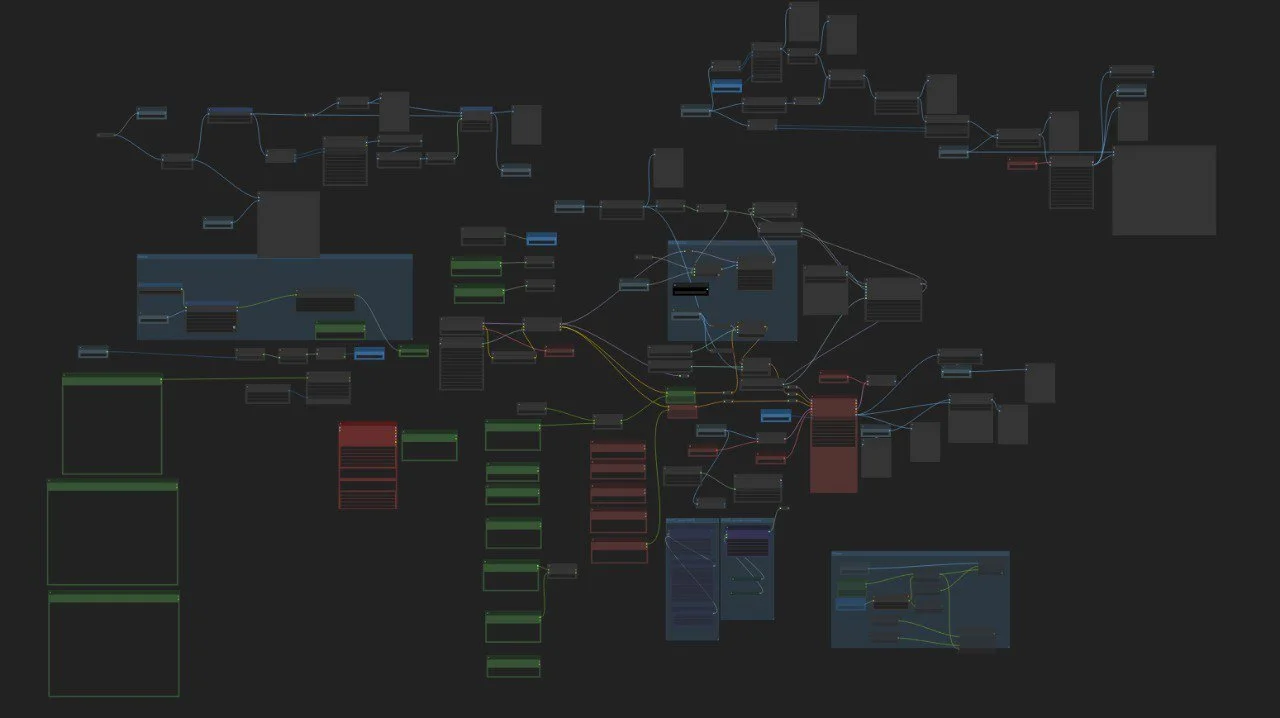
Designed a prompt-to-output workflow using tools like Stable Diffusion, Runway, and ComfyUI, where every visual, motion asset, and campaign image was generated entirely through AI.
Translated campaign strategy into platform-native ad formats (short-form video, motion graphics, key visuals), optimized for TikTok, Instagram, and YouTube.
Collaborated with cross-functional teams to test and refine outputs, proving that AI-generated advertising could match traditional creative standards while operating at scale.
Result & Impact
Produced a 100% AI-generated advertising campaign, delivering all creative assets — visuals, motion graphics, and short-form videos — entirely through generative AI workflows.
Accelerated campaign production by 40%, enabling faster creative iteration, A/B testing, and optimization across channels.
Delivered brand-consistent, platform-native content for TikTok, Instagram, and YouTube, ensuring cultural relevance and higher engagement.
Demonstrated that AI-driven advertising can achieve the same quality standards as traditional production while significantly reducing time-to-market and costs.
Positioned ABLO.AI as a pioneer in AI-powered creative production, establishing a new model for scalable advertising campaigns.
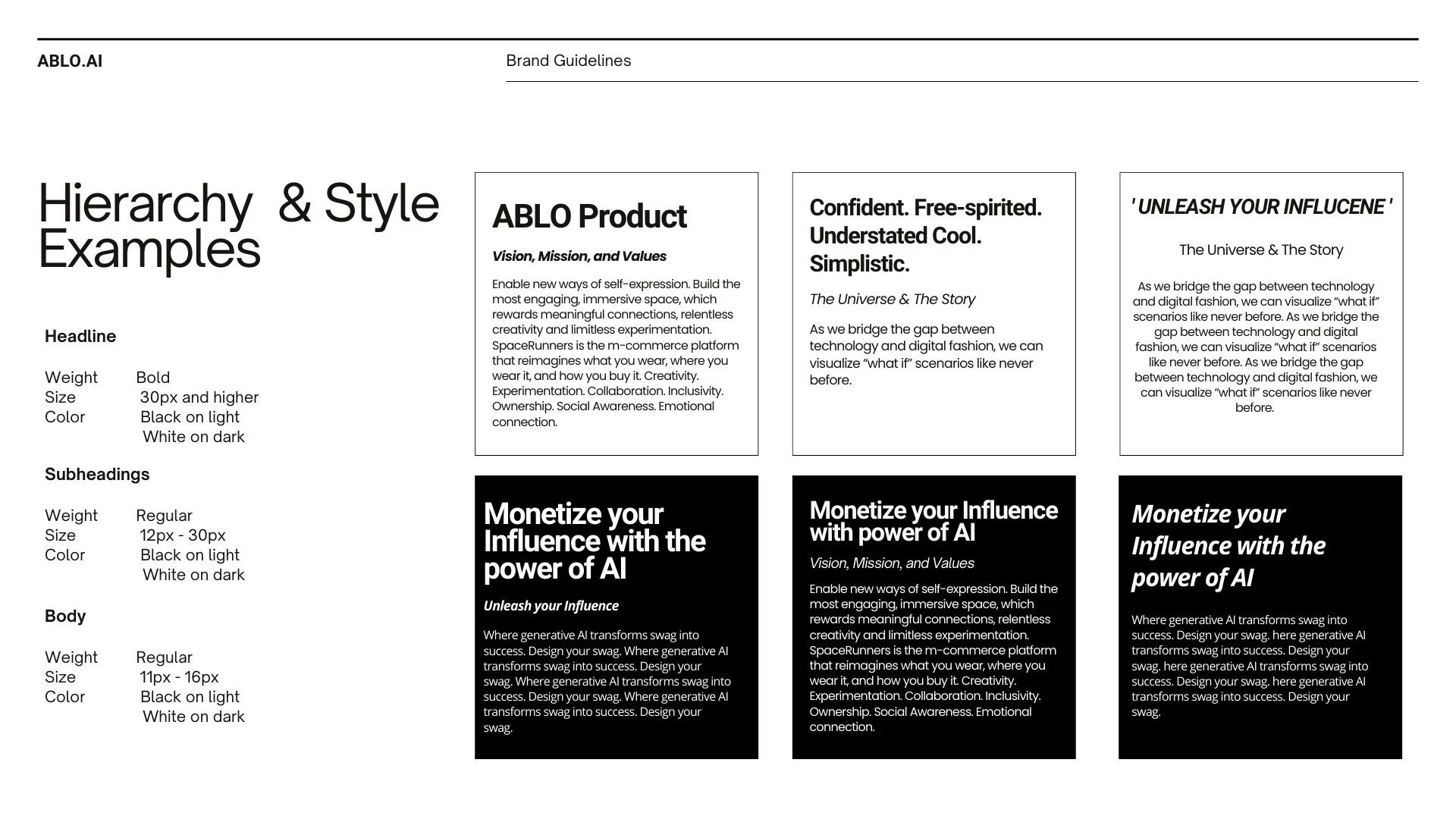
Defining the Brand Identity for ABLO.AI




AI Model Creative Training & User-Centric Styles
Recognizing our users weren't designers, we focused on providing intuitive starting points instead of complex prompts. Collaborating with a UX researcher, we analyzed current fashion trends and user needs to develop curated style categories (e.g., Kidult, Line Art, Pixel, Monochrome). This system empowered users to generate high-quality, brand-aligned results with simple selections, significantly reducing cognitive load and enhancing creative confidence.
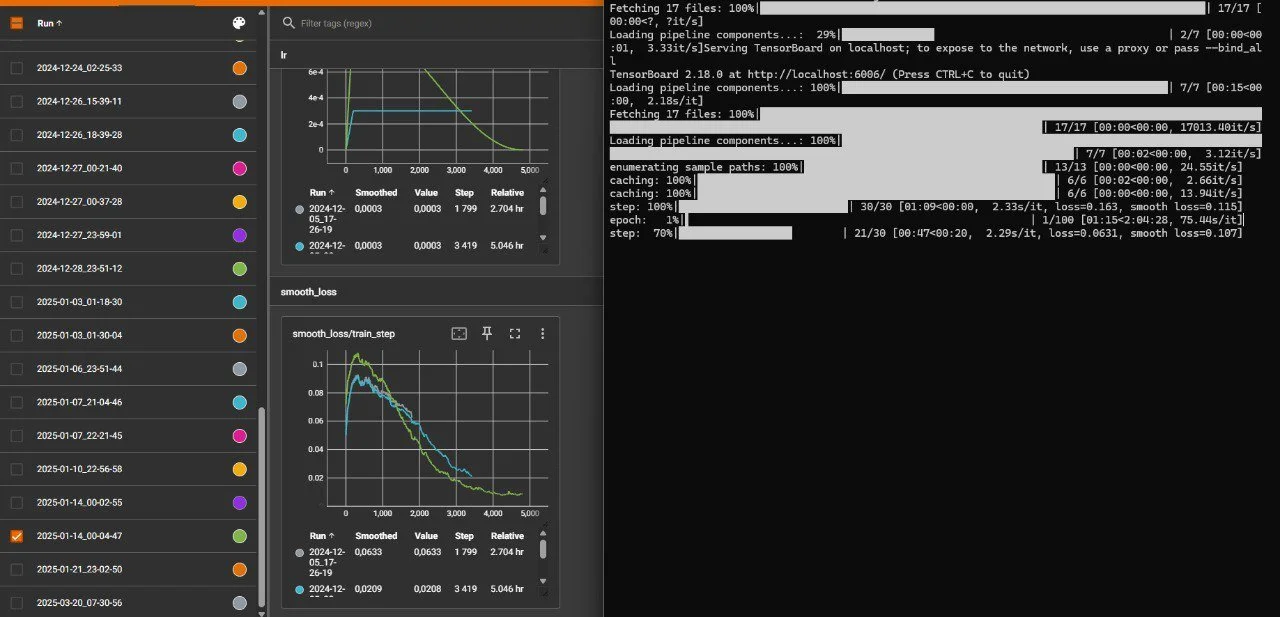
I led the creative direction for training our customized Stable Diffusion XL model, specifically leveraging LoRA (Low-Rank Adaptation) techniques. This was crucial for shaping Ablo.ai's unique aesthetic output:
Strategic Dataset Curation: I prepared and curated extensive image datasets that served as the AI's foundational learning material. This involved strategically sourcing diverse visual references (from the web) and generating new ones (using ComfyUI) to align the AI's output with our desired aesthetic (e.g., minimal forms, nostalgic textures, sculptural silhouettes, and our specific 'Kidult' or 'Line Art' styles).
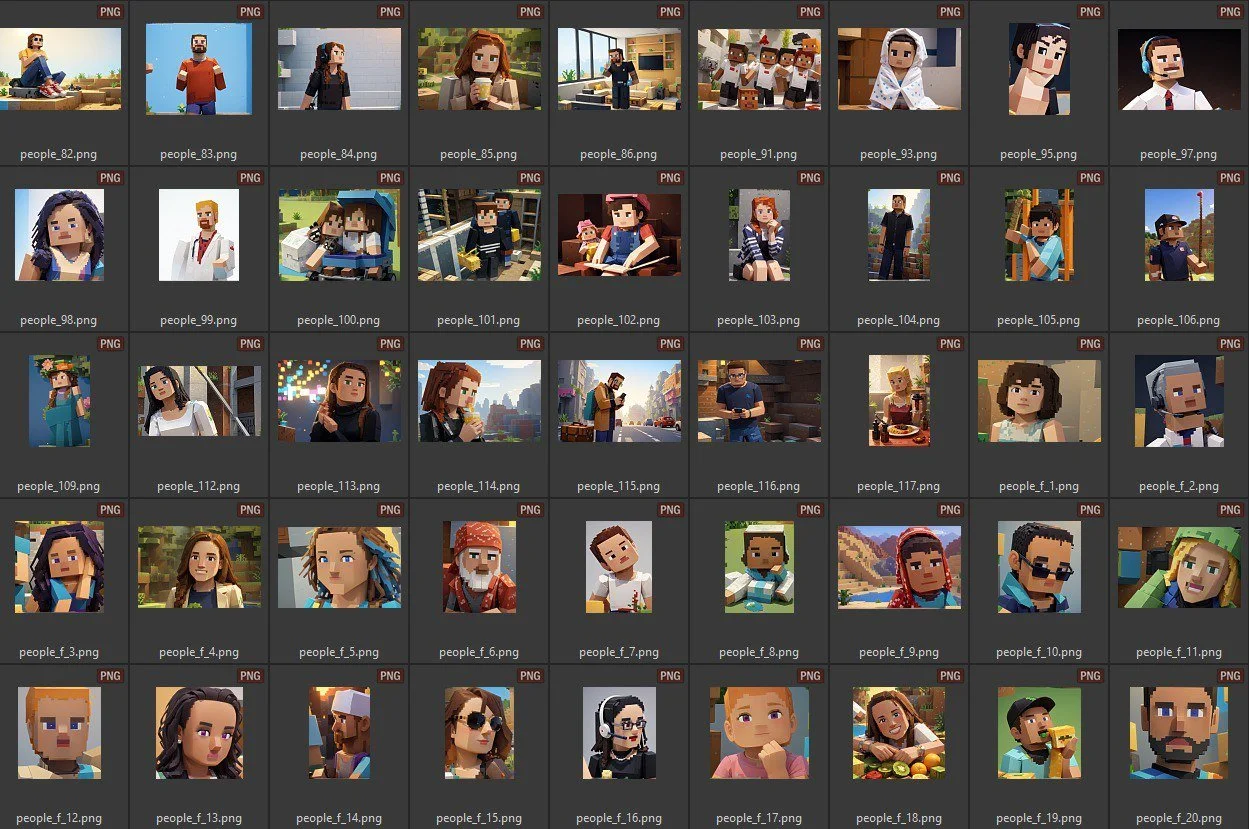
Workflow for Dataset
For instance, to achieve our distinct 'Line Art' style, I personally generated a dedicated training dataset in ComfyUI, which was then used to train a specific LoRA model. This was a critical step in programming the AI's visual vocabulary.
Custom Model Deployment: This iterative process culminated in the deployment of our custom-trained LoRA models alongside the base Stable Diffusion XL, enabling our platform to generate consistent, brand-aligned outputs at scale.
Semantic Training & Captioning Guidance: I partnered closely with engineers to translate subjective creative concepts like 'soft,' 'playful,' or 'edgy' into actionable AI learning parameters. This included providing guidance on detailed image captioning (leveraging LLMs for description), ensuring the AI accurately interpreted and categorized stylistic nuances within the dataset. This defined how the AI would understand and reproduce specific visual languages for both txt2image and img2img generation.
Workflow for Dataset